

When Teresa Met Augustine
How the Confessions gave St. Teresa courage in her struggle with sin

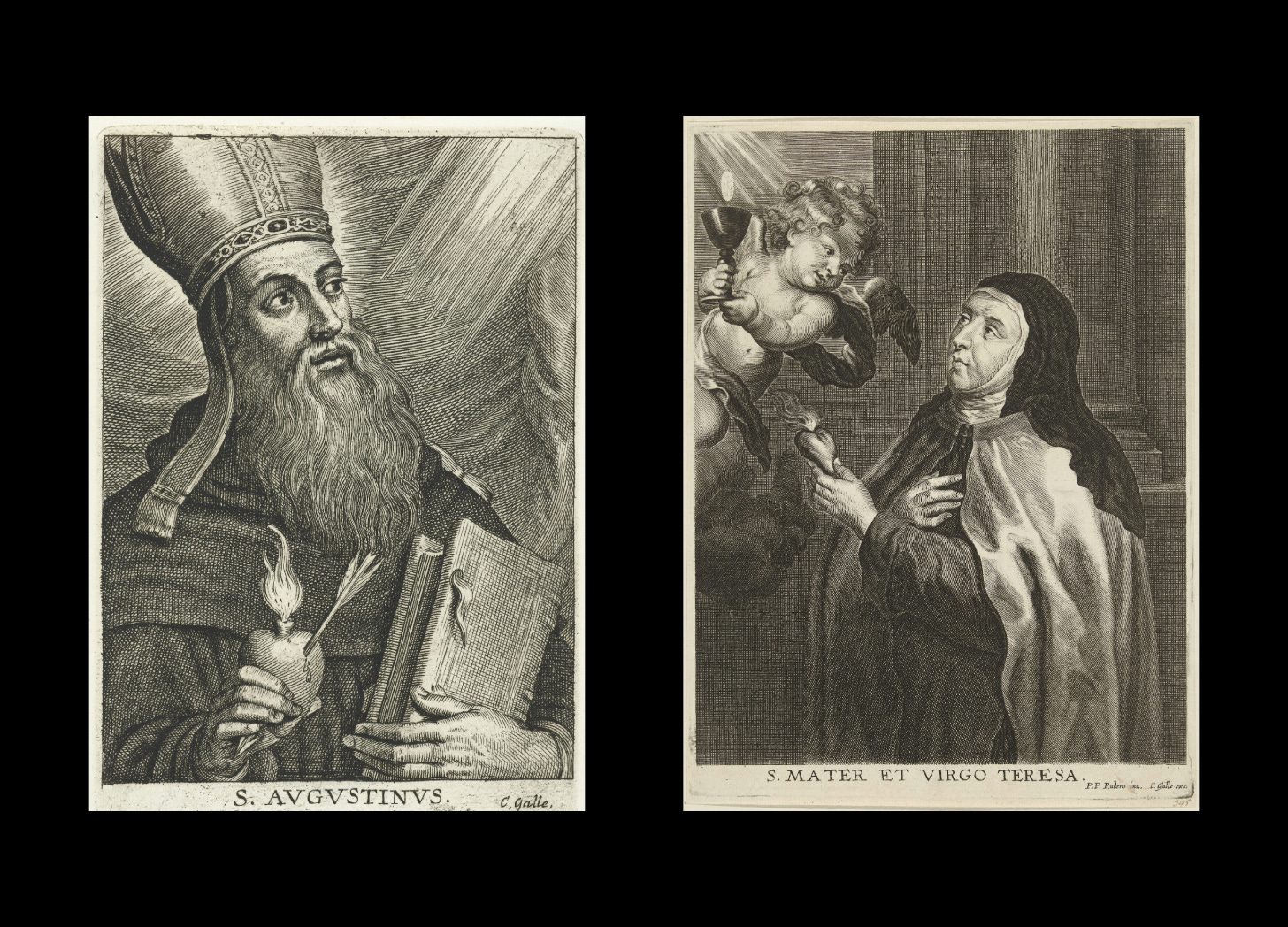
At this time, they gave me The Confessions of St. Augustine. It seems the Lord ordained this because I had not tried to procure a copy, nor had I ever seen one.
I am very fond of St. Augustine, because the convent where I stayed as a lay person belonged to his order; and also because he had been a sinner, for I found great consolation in sinners whom, after having been sinners, the Lord brought back to Himself. It seemed to me I could find help in them and that since the Lord had pardoned them, He could also pardon me.
But there was one thing that left me inconsolable, as I have mentioned, and that was that the Lord called them only once, and they did not turn back and fall again; whereas in my case I had turned back so often that I was worn out from it.
But by considering the love He bore me, I regained my courage, for I never lost confidence in His mercy; in myself, I lost it many times.
— Saint Teresa of Avila
The Book of Her Life, chap. 9, no. 7
Note: When St. Teresa writes "at this time," she is referring to a pivotal moment of interior conversion described earlier in the same chapter. Weary of her repeated failures, she entered the oratory one day and saw a borrowed image of the suffering Christ—Ecce Homo by Albert Bouts. Struck by the sight of His wounds and her own ingratitude, she collapsed in tears, begging the Lord to strengthen her once and for all. It was during this renewed openness of heart that someone gave her The Confessions of St. Augustine, which would become a significant influence in her path of conversion.
⬦ Reflection Question ⬦
Do I let the mercy of God strengthen me when I feel worn out by my failures?
⬦ Join the conversation in the comments.
Source reference
Teresa of Avila, St. 1985, The Collected Works of St. Teresa of Avila, translated from the Spanish by Kavanaugh, K; Rodriguez, O, ICS Publications, Washington DC.
Featured image
This side-by-side composition features two 17th-century engravings. The first depicts St. Augustine holding a flaming heart pierced by an arrow (engraving by Schelte Adamsz. Bolswert after a design by Peter Paul Rubens). The second shows St. Teresa of Avila in Carmelite habit, receiving a chalice from an angel while holding a flaming heart (anonymous engraver, after Cornelis Galle II and Rubens).
Image credit: Rijksmuseum / Public domain